What Is AEO (Answer Engine Optimization) and Why It Matters for Small Business
AI Search, Answer Engine Optimization, Small Business Marketing
What Is AEO (Answer Engine Optimization) and Why It Matters Now
Answer engine optimization (AEO) means structuring your content and business data so AI systems—like Google AI Overviews, voice assistants, and chatbots—can clearly understand, trust, and feature your answer. Instead of only chasing clicks, AEO helps your small business become the cited source inside AI-generated responses.
Why AEO Matters Right Now for Small Businesses
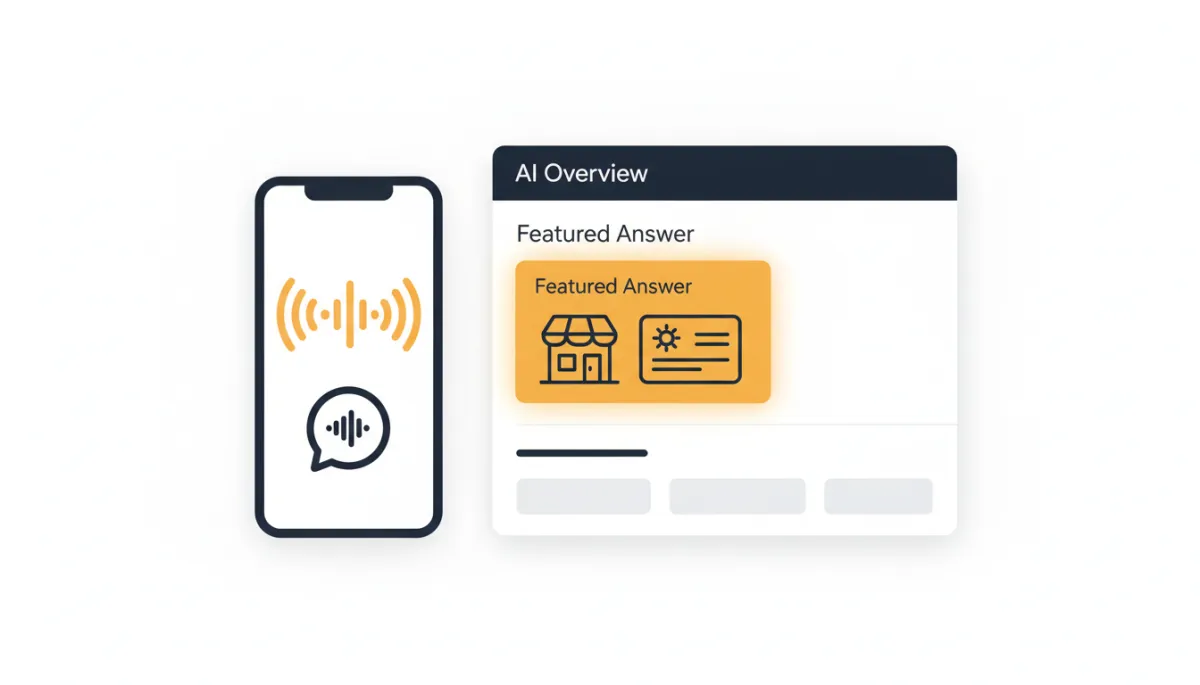
Search behavior has changed faster than most small business owners realize. In early 2026, studies show that around 68–69% of Google searches end without a click—people get their answer directly on the results page or inside Google AI Overviews instead of visiting a website. At the same time, nearly half of queries now trigger some form of AI-generated summary or overview.
That shift is critical. Traditional SEO still matters, but it is no longer enough to “rank” and wait for clicks. Your content must be formatted so AI systems can safely quote you, pull your answer into featured snippets, and read your response aloud through voice search. This is exactly what answer engine optimization focuses on—making your content the easiest, most trustworthy answer for AI to reuse.
For Latino businesses and local entrepreneurs in Orlando, AEO is a chance to punch above your weight. Most brands still have no AEO strategy, even while AI-related visibility is growing over 40% year over year. Early movers—especially those with strong local expertise and bilingual content—can become the default answer for high-intent questions in their niche.
AEO vs Traditional SEO — What’s the Real Difference?
AEO does not replace SEO—it builds on it. You still need solid SEO so Google and other engines can crawl, index, and trust your site. But the goal posts have moved. Instead of just ranking blue links, answer engine optimization aims to be the quoted passage in AI Overviews, featured snippets, and voice replies from assistants like Google Assistant or Alexa.
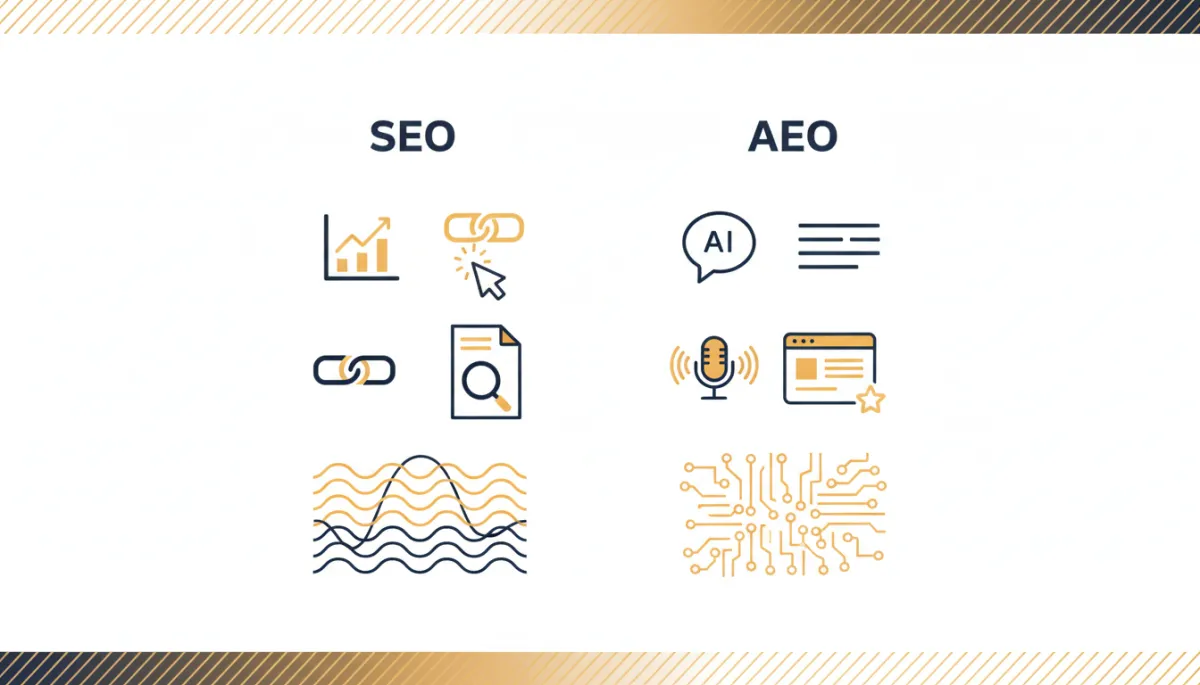
Treat SEO as your eligibility layer, and AEO as how you win the actual answer.
In practice, this means you do not choose between SEO and AEO. You combine them—strong technical SEO and authority, plus answer-first formatting and structured data that make your expertise easy for AI to reuse safely.
How AEO Works — Featured Snippets, AI Overviews, and Voice Search
When someone searches “best Latino accountant in Orlando for small business” or asks a voice assistant “Who’s the best taco catering near me?”, multiple systems are working behind the scenes. Traditional search retrieves relevant pages. On top of that, AI models scan those pages for short, trustworthy passages that directly answer the question. Those passages fuel featured snippets, Google AI Overviews, and voice responses.
AEO makes your content easier to select at this passage level. Clear headings, answer-block intros, bullet lists, and FAQ sections give AI models clean chunks they can quote. Schema markup—like FAQPage, LocalBusiness, and speakable schema—tells machines exactly which parts of a page are questions, answers, or ideal for text‑to‑speech. Consistent business data (name, address, phone, services) across your site and directories reinforces that all these answers point to the same trusted entity—you.
Research shows that properly structured “answer-first” formats can more than triple citation rates in AI-generated results. For small businesses, that can mean being the single answer a customer hears in their car or sees at the top of an AI Overview—no scrolling, no list of competitors, just you.
5 AEO Tactics Any Small Business Can Apply Today
Create answer-block intros on key pages. Start important pages—services, locations, pillar blog posts—with a 40–60 word paragraph that gives a direct, plain-English answer to the main question. This post’s opening is an example. Use your primary AEO keyword, like “answer engine optimization,” in a natural way, and keep the language simple enough to be read aloud by voice search systems.
Add FAQPage schema to your most common questions. Collect the real questions customers ask—pricing, availability, “Do you serve my neighborhood?”, “Do you speak Spanish?”—and publish them in a clear FAQ section. Then implement FAQPage schema markup so Google and other engines can recognize each question‑answer pair. This increases your eligibility for featured snippets, AI Overviews, and rich FAQ displays in search results.
Use speakable schema for voice search. For pages that are great candidates for voice search—like “About our Orlando cleaning services” or “How our bilingual tax prep works”—mark up 30–60 second sections with speakable schema. This highlights which text is ideal for assistants to read aloud, improving your chances of being the voice answer when someone asks their phone or smart speaker for help.
Target conversational, question-based keywords. Traditional SEO often focuses on short phrases like “Orlando plumber.” AEO adds natural questions and long‑tail phrases that match how people actually speak: “Who is the best emergency plumber in Orlando?”, “¿Dónde encuentro un contador para mi pequeño negocio latino en Orlando?”. Build content around these full questions, and answer them directly near the top of the page in structured content blocks.
Clean up your NAP and entity signals everywhere. AI systems rely heavily on entity consistency—your business name, address, phone number, categories, and services must match across your website, Google Business Profile, Yelp, Facebook, and Latino business directories. Audit these listings, fix inconsistencies, and use LocalBusiness schema markup on your site. Strong, consistent entity data increases trust, which increases your odds of being selected in AI Overviews and voice search results.
AEO for Latino Small Businesses in Orlando
Latino entrepreneurs in Orlando have a unique advantage in answer engine optimization—you understand the real questions your community asks, in both English and Spanish. AEO lets you turn that cultural insight into structured content that AI systems can easily surface when someone searches “taller mecánico cerca de mí” or “best bilingual realtor in Orlando for first‑time buyers.”
Focus on bilingual pages with clear, separate sections for each language, and use local intent phrases such as “in Orlando,” “near Lake Nona,” or “serving Kissimmee and Central Florida.” Combine this with local schema markup and consistent NAP data. As AI Overviews lean more heavily on structured local content, well-optimized Latino businesses can become the default recommendation for both English and Spanish voice search in their neighborhoods.
💡 Pro Tip: Listen to how your customers actually ask questions—in person, on WhatsApp, and over the phone—then turn those exact phrases into headings, FAQs, and answer blocks on your site.
Take the Next Step — From AEO to Full GEO Strategy
AEO is your foundation for being the trusted answer in featured snippets, Google AI Overviews, and voice search. But it is only one piece of the new AI search landscape. Generative Engine Optimization (GEO) looks at the bigger picture—how all major AI systems discover, evaluate, and cite your brand across chatbots, research tools, and autonomous agents. Together, SEO, AEO, and GEO form a complete playbook for AI-powered marketing and small business growth.
Ready to take your AI search visibility even further? Read our complete guide: What Is GEO (Generative Engine Optimization)? It builds on the AEO concepts in this article and shows how Moises Rivera and Impulso Digital Latino help small and Latino-owned businesses lead—not chase—the next wave of AI-driven search.


